

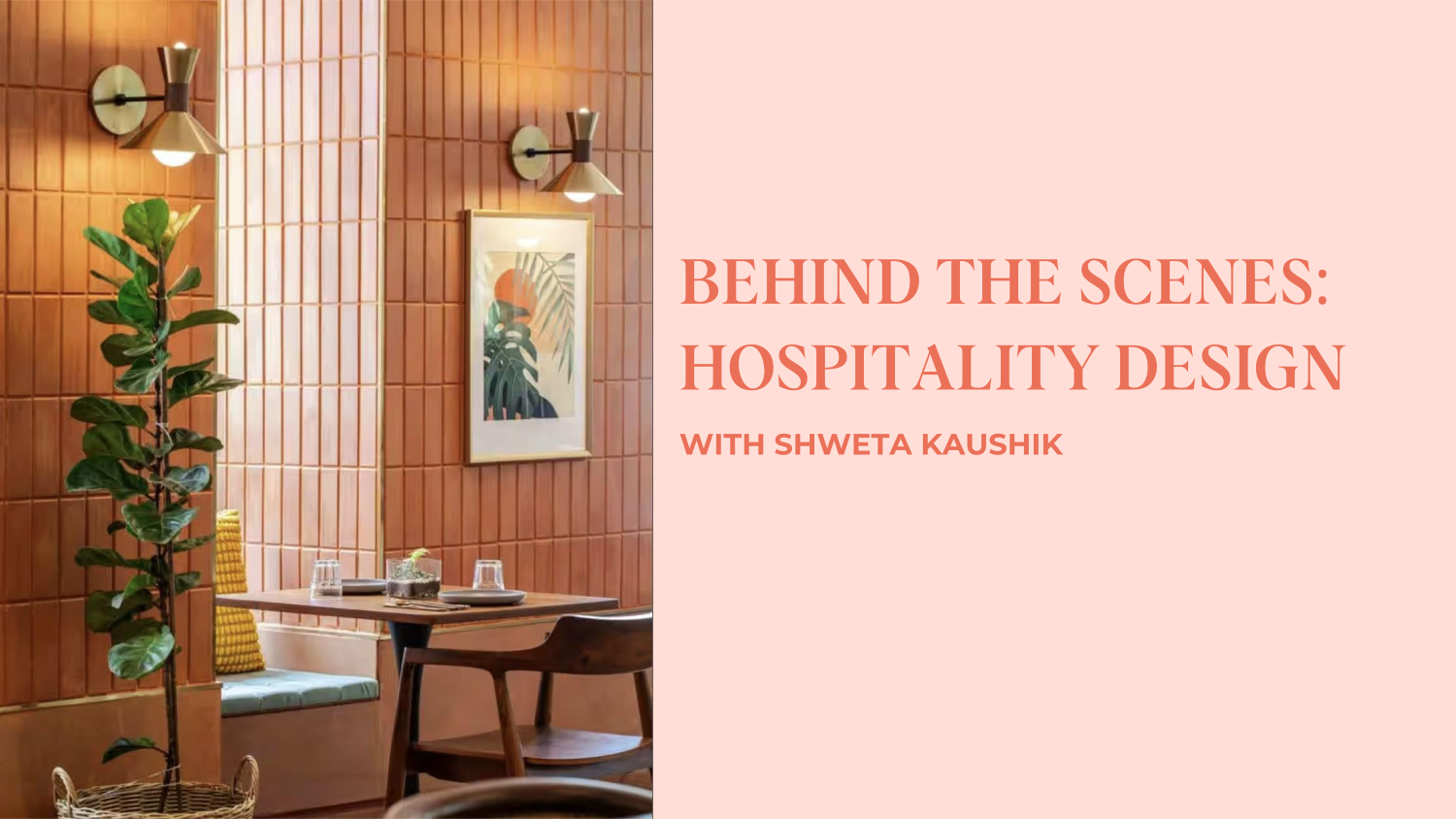
Great hospitality isn’t just about food and drinks -it’s about the experience, and that experience starts the moment a guest walks through the door. The lighting, the textures, the way a space flows; it all plays a role in setting the mood and making people feel at home. Few understand this better than Shweta Kaushik, a leading designer specializing in hospitality venues, and founder of SKID.
With a career dedicated to crafting immersive spaces that seamlessly blend functionality with storytelling, Shweta has helped shape some of India’s most exciting bars, restaurants, and hotels. But what does it really take to design a venue that not only looks stunning but also works effortlessly behind the scenes?
In this conversation, we dive into her creative process, how she found her niche in hospitality design, and the non-negotiables that every great venue needs.

1. What drew you to hospitality design, and how did you carve out a niche in this space?
SK: I’ve always believed that a great space can change your mood, your experience—even your drink order. Hospitality design is all about that magic. You walk into a place, and suddenly, you’re in the mood for a negroni instead of your usual gin and tonic. That’s not just good lighting—that’s storytelling.
I started my studio in 2010 because I wanted to design spaces that weren’t just beautiful but immersive. Over time, I realized I was particularly obsessed with restaurants and bars; places where people gather, where design and experience go hand in hand. My niche? Let’s call it restrained drama - bold, unexpected, but never over the top. I take traditional elements and reinterpret them, mixing modern with the timeless in a way that feels effortless (even though a lot of effort goes into it).
"A badly designed hospitality space is like a beautiful pair of shoes that give you blisters—looks great, but you’ll never wear them again."
2. What’s your creative process when designing a new venue? Where do you start, and how do you bring a concept to life?
SK: Every project starts with a story. If a space doesn’t have a narrative, it’s just a room with furniture. The concept can come from anywhere -the cuisine, the culture, the owner’s personality, even a single object that sparks inspiration. I once designed an entire space based off a painting and another time inspired by a Thai temple.
Once I have the concept, I dive into mood-boarding, sketching, and material selection. I love natural, tactile materials that age beautifully -nothing too precious, because let’s be real, restaurants take a beating. Then comes layout planning—because a stunning space is useless if it doesn’t work.
Finally, it’s all about layering—textures, lighting, small details that make people want to stay longer, order another round, and subtly wonder why they feel so damn comfortable. That’s when I know I’ve done my job.

3. Bars and restaurants are high-traffic, high-energy spaces. What are some design elements that are non-negotiable to ensure both aesthetics and functionality?
SK: Oh, where do I start? A badly designed hospitality space is like a beautiful pair of shoes that give you blisters—looks great, but you’ll never wear them again. Here are my non-negotiables:
• A bar that actually works – Bartenders need efficiency. A poorly designed bar can slow down service, so every station needs to be optimized. If bartenders have to perform acrobatics just to grab a bottle, we’ve failed. The layout needs to be tight, efficient, and seamless.
• Materials that don’t betray you – Everything from flooring to tabletops needs to withstand spills, heavy foot traffic, and constant wear. I love natural materials, but they need to be chosen wisely. Durability is everything.
• Lighting that gets the assignment – Lighting should evolve through the night. Overhead spotlights make people look like ghosts. Too dim, and they can’t read the menu. Layered, warm, and adaptable lighting is key.
• Acoustics that don’t ruin conversations – Sound can make or break an experience. Nobody wants to shout across the table. Thoughtful material choices can absorb sound instead of amplifying chaos.
• A bathroom that isn’t an afterthought – People often overlook this, but a well-designed restroom is part of the overall experience. It should feel just as considered as the main space.

4. You’ve worked with a variety of venues, from intimate cocktail bars to large-scale restaurants. How do you tailor your approach to different kinds of hospitality spaces?
SK: It’s all about scale and intention. An intimate cocktail bar is like a well-tailored suit -everything is precise, moody, and designed for an immersive experience. You want people to feel like they’ve stepped into another world, whether it’s through rich textures, strategic lighting, or just the right amount of mystery.
A large-scale restaurant, on the other hand, is all about controlled drama. You need impact, but also balance. The challenge is making a big space feel inviting -not like an overstuffed banquet hall. There’s a rhythm to it, how guests enter, how they transition through different zones, how the energy shifts from lunch to dinner.
No matter the size, my philosophy stays the same: unexpected but timeless, bold but never gimmicky, and always designed for real people, not just for a photoshoot.
5. For bar and restaurant owners looking to create a memorable space, what’s the biggest design mistake to avoid?
SK: The biggest mistake? Designing for Instagram instead of humans. A great-looking space will get you attention, but if it’s uncomfortable, poorly planned, or just too try-hard, people won’t come back. You want guests to post a photo and stay for three rounds of cocktails.
Another classic mistake? Ignoring the flow. I’ve seen beautiful restaurants ruined by terrible layouts—bartenders running a marathon just to make a drink, tables crammed together like a puzzle, kitchens placed in exile. If your staff isn’t happy, your guests won’t be either.
And can we talk about lighting one more time? There’s a special place in design hell for places that blast overhead white lights at night. Let’s all agree: flattering, warm, and layered lighting is the way to go.
Great design is the foundation of a successful hospitality venue -it shapes the atmosphere, influences guest behaviour, and ensures seamless operations behind the scenes. As Shweta Kaushik highlights, a well-designed space isn’t just about aesthetics; it’s about storytelling, functionality, and creating an environment where both guests and staff thrive.
Her insights serve as a masterclass in balancing beauty with practicality, from optimizing bar layouts for efficiency to crafting lighting that evolves through the night. Whether you’re opening a new venue or refining an existing one, understanding the principles of thoughtful design can make all the difference between a space that simply looks good and one that truly works.
For those looking to elevate their hospitality space, Shweta’s approach is a blueprint for success. One that ensures guests don’t just visit, but return time and time again.


